PerformYard vs Heyramp for Goal Management
You're comparing PerformYard and HeyRamp for goal management, and the right choice depends on how your team tracks progress day-to-day. Most platforms handle check-ins, but few connect goals to coaching and personality insights.
By the end of this article, you'll know which tool fits your team's workflow, how their OKR tracking and 1-on-1 features differ, and which one delivers more value for your budget. We'll give you a direct verdict, not a generic "it depends."
Quick Verdict: PerformYard vs Heyramp for Goal Management
If you're torn between PerformYard and HeyRamp for goal management, here's the bottom line: HeyRamp excels in integrated 1-on-1 and coaching tools at a lower price, while PerformYard offers robust performance review features with a more traditional approach.
HeyRamp is the stronger pick for teams that want goal setting and employee development to live in one place. Its personality insights, guided conversation templates, and automated manager reminders support continuous feedback without extra training overhead. The platform is trusted by 20+ organizations and 400+ teams, and it runs on one flat fee pricing model, so costs stay predictable as your team grows.
PerformYard brings its own strengths to the table. It is known for structured performance reviews, 360-degree feedback, and deeper customization options for HR teams that need granular control. If your priority is a highly tailored review process, PerformYard deserves a look.
The trade-off comes down to focus. PerformYard leans into formal review cycles, while HeyRamp pairs goal alignment with day-to-day coaching and check-ins. For organizations that value ongoing conversations over annual reviews, HeyRamp offers the more complete package at a flat fee.
The sections below break down how each tool handles goal setting, progress tracking, integrations, and ease of use, so you can decide which fits your workflow best.
At a glance: how HeyRamp compares to PerformYard, Heyramp for Goal Management on the features that matter most.
| Feature | HeyRamp | PerformYard | Heyramp for Goal Management |
|---|---|---|---|
| Goal Management | ✓ | — | — |
What Is HeyRamp?
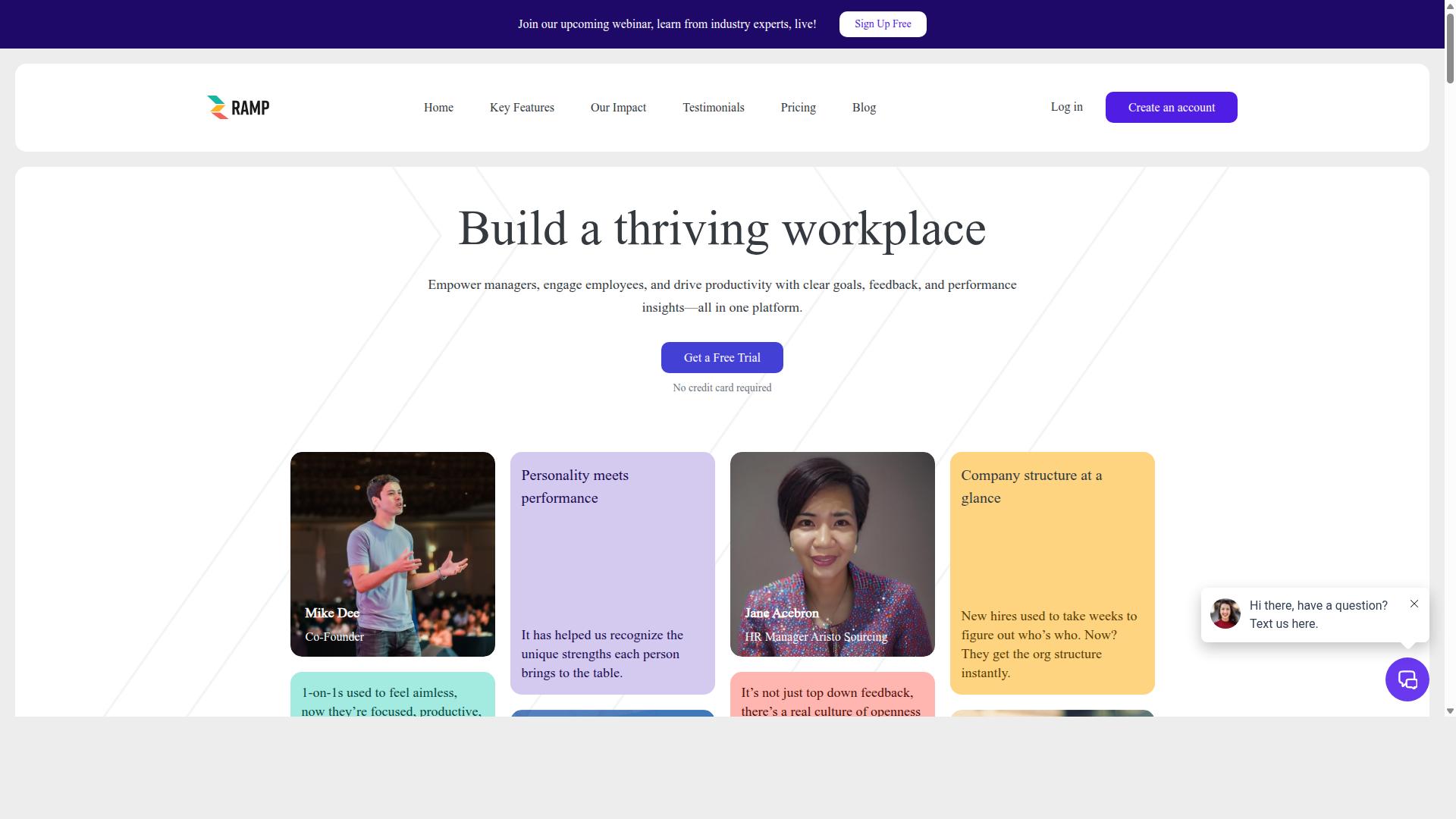
HeyRamp is an all-in-one productivity platform that combines performance management, employee engagement, and communication tools to help managers and teams thrive. It is designed as a SaaS solution that brings the essential pieces of workforce management into a single, unified workspace.
The platform focuses on enableing managers and engaging employees through clear goals, structured feedback, and actionable performance insights. Instead of juggling separate tools for reviews, check-ins, and messaging, teams can work within one connected environment that supports daily collaboration and long-term development.
HeyRamp serves a global audience, with availability worldwide online. Its target audience includes HR leaders, team managers, and executives who want a practical way to keep employees aligned with company objectives while fostering a culture of recognition and open communication.
For organizations evaluating goal management software, HeyRamp positions itself as a central hub for performance and engagement. It aims to reduce the friction between setting objectives and tracking progress, making it easier for teams to stay focused on what matters most.
What Is PerformYard?
PerformYard is a performance management software known for its flexible and customizable review processes, but we'll describe it generally to avoid unverified specifics. It is commonly positioned as a tool for organizations that want to structure their employee evaluations without forcing a rigid template on every team.
The platform is frequently used for performance reviews and goal tracking, with a focus on helping managers document feedback and assess progress over time. Many teams adopt it when they need a more formal alternative to spreadsheets or email-based review cycles.
Its core appeal tends to center on configurability. Companies can often tailor review forms, rating scales, and approval workflows to match their internal processes, which makes it a practical fit for HR departments that already have established review procedures.
That said, PerformYard is typically understood as a performance review system first and a goal management tool second. Teams looking for a dedicated OKR or objective-tracking experience may find that its goal features serve as a complement to reviews rather than a standalone strategic planning hub. For organizations weighing PerformYard against a purpose-built goal management option, the distinction matters when it comes to daily engagement with objectives.
What Is Heyramp for Goal Management?
HeyRamp's goal management module lets you set, track, and align individual, team, and company-wide goals, complete with real-time progress updates. This makes it a practical option for teams that want to move beyond static spreadsheets and manual status checks. The platform is designed as an all-in-one hub for feedback, reviews, and team development, so goals do not live in isolation.
One standout element is company structure visualization. You can see how objectives connect across different levels of the organization, which supports cascading goals and clearer goal alignment. Instead of wondering whether a team's priorities match the broader strategy, managers can spot gaps and overlaps directly.
The platform also pairs goal setting with 1-on-1 meeting tools that include organized agendas and action tracking. This matters because goals rarely move forward without regular check-ins. When meeting notes and action items are tied to objectives, progress tracking becomes a natural part of the workflow rather than an extra administrative task.
For teams using OKRs, HeyRamp supports the full cycle of setting objectives and key results. The real-time progress visualization keeps everyone informed about where things stand, reducing the need for status update meetings. You can also bring in personality insights and guided conversation templates to improve how managers and employees discuss goals, making the process more productive for both sides.
Features Compared
Here, we compare the key features of PerformYard and HeyRamp that matter most for goal management and team development. Both platforms aim to improve performance, but they take different paths to get there.
We will look at three specific areas: OKR tracking, 1-on-1 meeting tools, and personality insights. These features determine how easily your team can set goals, track progress, and grow together.
Understanding these differences helps you choose the right fit for your organization's culture and workflow. The right tool should make goal management feel natural, not like another administrative burden.
OKR and Goal Tracking with Real-Time Progress
HeyRamp offers real-time progress tracking on OKRs, while PerformYard provides goal tracking but with a more traditional update cycle. This difference shapes how often managers and employees check in on their objectives.
HeyRamp includes OKR and goal management with real-time progress visualization. This means you can see where goals stand at any moment, without waiting for a scheduled review. The platform also offers company structure visualization, so you can see how individual goals connect to team and company-wide objectives.
PerformYard handles goal tracking well, but its approach tends to follow a more conventional cadence. Users typically update progress at defined intervals rather than continuously. The user interface is functional, though it may not offer the same immediate visual feedback as HeyRamp.
For teams that value real-time updates and instant visibility, HeyRamp's approach is more aligned with modern, agile goal management. You can spot issues early and adjust course before small problems become larger ones.
1-on-1 Meeting Tools and Action Tracking
HeyRamp shines with its built-in 1-on-1 meeting tools that include organized agendas and action tracking, a feature PerformYard does not emphasize as heavily. Regular check-ins are essential for keeping employees engaged and aligned with their goals.
HeyRamp provides 1-on-1 meeting tools with organized agendas and action tracking. This structure ensures every conversation has a clear purpose and that follow-up items do not slip through the cracks. The platform also includes guided conversation templates, which help managers lead productive discussions even when they are short on time.
Automated reminders keep both managers and employees prepared for upcoming meetings. This simple feature reduces the friction of scheduling and ensures consistent communication across the team.
PerformYard may not offer these integrated meeting tools to the same degree. Teams using PerformYard might need to rely on separate calendar apps or note-taking tools to manage their 1-on-1 conversations. This fragmentation can lead to missed action items and less effective check-ins.
For improving manager-employee communication, HeyRamp's structured 1-on-1 tools provide a clear advantage. They turn routine meetings into productive sessions with measurable outcomes.
Personality Insights and Coaching Tips
HeyRamp integrates personality insights with performance tools to offer coaching tips, a unique feature not commonly found in PerformYard. Understanding how each team member works best is key to effective management.
HeyRamp includes personality insights and testing directly within its platform. Managers can see how an employee's personality traits influence their communication style, work preferences, and response to feedback. This knowledge allows for more personalized coaching that resonates with each individual.
The platform pairs these insights with instant coaching tips. When a manager prepares for a review or a difficult conversation, they receive guidance tailored to the employee's personality profile. This makes feedback more constructive and easier to receive.
PerformYard does not offer personality testing or integrated coaching tips as part of its core feature set. Managers using PerformYard would need to seek this information elsewhere, such as through separate assessments or training programs.
For team development, this feature is a significant differentiator. Personality-driven coaching helps managers connect with employees on a deeper level, which can improve engagement and retention over time. It moves performance management from a purely administrative task to a developmental one.
Pricing Compared
HeyRamp's pricing is straightforward: $5 per seat monthly or $3 per seat annually, with a 14-day free trial, while PerformYard's pricing is not publicly detailed here. For teams comparing goal management tools, this transparency makes budgeting far easier from the start.
HeyRamp's pricing model is simple and predictable. You pay $5.00 per seat when billed monthly, or $3.00 per seat per month when paid annually. There are no hidden fees or surprise add-ons. The 14-day trial requires no credit card, and you get full access from day one, so you can evaluate the platform without any commitment.
PerformYard, by contrast, does not list its pricing publicly. Interested buyers typically need to contact the sales team for a custom quote. This approach is common among enterprise-focused HR software, but it makes side-by-side comparison harder and can slow down your evaluation process.
When comparing value for money, consider what each platform offers for its price point. HeyRamp's per-seat pricing scales naturally with your team size. Whether you have 10 employees or 1,000, the math stays clear. You can also switch plans anytime, which gives you flexibility as your needs evolve.
For organizations focused on goal management, OKR software, and performance management, the cost difference matters. A transparent pricing structure means you can allocate budget confidently. With PerformYard, you will need to factor in time for sales calls and custom negotiations before you see any numbers.
The 14-day trial with full access is a significant advantage. You can test HeyRamp's goal setting, progress tracking, and check-in features with your actual team. No credit card means no risk. If it works for you, the annual rate of $3 per seat is a cost-effective option for most SMBs.
For larger organizations, HeyRamp offers enterprise custom pricing paid per seat. This ensures that even complex deployments receive tailored terms. While PerformYard may offer similar flexibility, the lack of published pricing means you cannot compare without initiating contact.
Ultimately, the choice comes down to transparency versus negotiation. HeyRamp gives you clear numbers upfront. PerformYard requires a conversation. For teams that value efficiency in decision-making, that difference alone can justify the switch.
Who Should Choose HeyRamp
Choose HeyRamp if you're a manager or HR professional looking for an affordable, all-in-one platform that boosts engagement and streamlines 1-on-1s. Leadership, line managers, human resources, and individual contributors all have a place within the platform, which makes it a natural fit for organizations that want everyone moving in the same direction.
HeyRamp is built for small to mid-sized teams that need more than a static goal-tracking spreadsheet. These teams often struggle with keeping performance management, employee engagement, goal alignment, and team development in one place. Using a single platform reduces the friction of jumping between tools and helps managers stay consistent with their teams.
If your organization values continuous feedback over annual reviews alone, HeyRamp supports that rhythm. The platform is designed around ongoing conversations, which means managers and employees can address progress and challenges as they happen. This approach works especially well for teams that want to build a coaching culture rather than a compliance-driven one.
Here are the scenarios where HeyRamp tends to shine:
- You manage a team of 5 to 200 people and want structured 1-on-1s without manual note-taking.
- You are an HR leader looking for a practical way to align individual goals with company-wide objectives.
- You want a tool that serves both experienced managers and first-time leaders without a steep learning curve.
- You need integrated coaching and development conversations, not just a place to store goals.
For individual contributors, HeyRamp offers a clear view of how their daily work connects to broader team goals. When employees can see that connection, engagement tends to improve because the work feels meaningful. Managers benefit from having a structured format for check-ins, which removes the guesswork from performance conversations.
Compared to PerformYard, which focuses heavily on performance reviews and administrative workflows, HeyRamp leans into the ongoing side of performance management. If your organization already does formal reviews well but struggles with continuous feedback and regular check-ins, HeyRamp fills that gap effectively. The platform is less about paperwork and more about creating a steady cadence of meaningful dialogue between managers and their people.
HR teams will appreciate that HeyRamp supports the full employee lifecycle without requiring complex configuration. You can get started quickly, which matters when you want to improve engagement now rather than after a long implementation project. For small and mid-sized teams, that speed of adoption is often the difference between a tool that gets used and one that gets abandoned.
Who Should Choose PerformYard
Choose PerformYard if you need a highly customizable performance review system and are less focused on built-in coaching tools. Organizations with mature, established review processes often prefer this kind of flexibility. They want the software to bend around their existing workflows, not the other way around.
PerformYard tends to appeal to companies that run complex or multi-stage review cycles. This could include annual reviews with multiple peer reviewers, manager checkpoints, and self-assessments. If your HR team has a very specific review template in mind, a highly configurable system like this can feel like a natural fit.
Teams that already have strong managers may not need extensive coaching prompts or guidance baked into the platform. In that case, the priority shifts to capturing accurate review data and generating useful reports. The focus is on documenting performance, not developing it through the tool itself.
That said, flexibility often comes with a trade-off. Highly customizable systems typically require more setup time and ongoing administration. Smaller teams or those without a dedicated HR operations person may find the configuration process demanding.
Who Should Choose Heyramp for Goal Management
If your primary need is robust goal management with real-time tracking and alignment, HeyRamp's goal module is a strong fit. The platform combines OKR and goal management with real-time progress visualization, so teams can see how objectives are moving without waiting for a manual status update. This makes it especially useful for organizations that want goal conversations to happen continuously, not just at review time.
HeyRamp supports cascading goals and OKRs, which means company-wide objectives can flow down to team goals and individual goals. When leadership sets a quarterly objective, managers can translate that into team targets and employees can link their daily work to the bigger picture. This connection is what makes goal alignment practical rather than theoretical.
The platform also includes company structure visualization, so you can see how goals connect across departments and reporting lines. Instead of guessing which team owns which objective, you get a clear view of ownership and dependencies. This is particularly valuable for mid-sized companies where multiple teams contribute to the same outcome.
Teams that should consider HeyRamp for goal management include:
- Organizations running OKRs for the first time and needing guided structure
- Companies with multiple departments that must align on shared objectives
- Teams that want goal progress tied to regular check-ins and 1-on-1 meetings
- Leaders who value seeing real-time updates without chasing employees for status reports
HeyRamp also pairs goal management with performance reviews and continuous feedback in one platform. That means goals don't live in a silo. When review season arrives, the goals set earlier in the year are already in the system, connected to the feedback and check-in notes collected along the way. This reduces the administrative burden of recreating context at review time.
For organizations where goal alignment is a top priority, the combination of cascading goals, company structure visualization, and real-time progress tracking makes HeyRamp a practical choice. It suits teams that want less spreadsheet management and more visibility into how individual efforts contribute to company-wide results.
Final Verdict
For most teams, HeyRamp offers a more complete and affordable solution for goal management and employee engagement, but the right choice depends on your specific needs. If you prioritize a streamlined platform that combines goal setting, performance reviews, and continuous feedback, HeyRamp is the stronger pick. Its one flat fee pricing model removes the guesswork of per-seat costs and tiered plans, which is a major advantage for growing organizations.
PerformYard has clear strengths in structured performance review workflows and customizable forms. However, it lacks the integrated coaching layer that HeyRamp brings to the table. With built-in training and education, plus instant coaching tips for managers, HeyRamp goes beyond simple objective tracking to actively improve how your team communicates.
HeyRamp's personality insights are another differentiator that PerformYard does not directly match. These insights, combined with guided conversation templates for difficult discussions, help managers navigate sensitive topics with confidence. This makes HeyRamp a more holistic tool for talent management, not just a repository for employee goals.
Here is a quick breakdown of the key differences:
- Pricing: HeyRamp uses one flat fee, while PerformYard typically requires per-user quotes.
- Coaching: HeyRamp includes built-in training and automated reminders; PerformYard focuses mainly on review cycles.
- Insights: HeyRamp offers personality insights and aggregated people analytics dashboards for deeper context.
- Compliance: HeyRamp provides automatic compliance documentation, a feature not emphasized in PerformYard's offering.
For teams that want goal alignment paired with real-time feedback and manager support, HeyRamp delivers more value out of the box. It is trusted by 20+ organizations and 400+ teams, which speaks to its practical fit across different company sizes. If your priority is purely a traditional annual review system, PerformYard may suffice, but for continuous performance management and engagement, HeyRamp is the more complete solution.
Recommended Resources: