Best No Code WhatsApp Chatbot Builders for Ecommerce in 2026
Your WhatsApp inbox is full of "is this still available?" while carts sit abandoned. Most ecommerce teams start comparing no code chatbot builders after manual replies stop scaling, or after a platform change forces a migration. The right builder turns those chats into orders without hiring more agents.
This article covers what to look for in a no code WhatsApp chatbot builder, then reviews eight options including Com.bot, ManyChat, Chatfuel, Landbot, Botpress, AiSensy, Interakt and Wati. You will get concrete criteria for matching a builder to your store, plus a clear number one pick.
What to Look For in No Code WhatsApp Chatbot Builders for Ecommerce
When evaluating no code WhatsApp chatbot builders for ecommerce, prioritize six capabilities that directly affect conversion and support efficiency. Each one shapes how quickly a store can launch, how reliably it can scale messaging, and how much manual work gets removed from the support and sales teams.
The criteria below apply regardless of which chatbot platform you eventually choose. Use them as a scorecard: a tool that checks five or six boxes will support ecommerce automation for years, while one that checks two or three may force a costly migration later.
1. No-code visual builder with drag-and-drop interface and pre-built ecommerce templates. A drag and drop builder lets merchandisers and support leads assemble flows without developer tickets. Pre-built templates for order confirmations, FAQs, and welcome journeys cut setup time from weeks to days.
The KPI impact is speed to launch. A store that ships its first flow in days starts recovering carts and answering questions in the same week, instead of waiting on a backlog of engineering requests.
2. Official WhatsApp Business API access with Meta verification. The WhatsApp Business API is the only compliant path for automated messaging at scale. A Meta verified partner status signals the provider follows platform policies and can help secure higher messaging limits as volume grows.
This matters for reliability. Unofficial workarounds risk number bans that wipe out an entire support channel overnight, and recovery can take days. Official access keeps conversational commerce running during peak seasons.
3. Ecommerce integrations with major platforms and payment gateways. Look for native Shopify integration, a WooCommerce plugin, a Magento connector, a BigCommerce app, and support for payment gateways such as Stripe payments and Razorpay checkout. Native connections sync orders, customers, and inventory without custom middleware.
The KPI here is cart abandonment recovery. When the bot can read live cart and order data, an abandoned cart reminder can include the exact product and a working checkout link, which lifts recovery rates compared with generic nudges.
4. Automation features for the full order lifecycle. The strongest platforms cover abandoned cart reminders, order tracking bots, product recommendation engines, and post purchase follow up in one workflow builder. These are the flows that replace repetitive agent work.
Consider response time. An order tracking bot that answers "where is my order" instantly removes a large share of inbound tickets, freeing agents for complex issues and improving first response time across the board.
5. Broadcast and interactive message support. Broadcast messaging lets you push promotions, restock alerts, and seasonal offers to opted-in audiences. Interactive message formats such as quick replies, buttons, and catalog messages keep conversations moving, while template message approval keeps campaigns compliant.
Click to WhatsApp ad support completes the loop. Shoppers who tap an ad land in a chat instead of a landing page, which shortens the path from ad spend to conversation and makes lead qualification faster and more measurable.
6. Analytics and AI intent detection. Dashboards should show conversation volume, resolution rates, drop-off points, and revenue attributed to chat. AI intent detection routes buyers to the right flow automatically, whether they need sizing help, a return, or a bulk quote.
This is the optimization layer. Teams that review intent data weekly can retire weak flows and expand high-performing ones, steadily improving conversion without adding headcount. Together, these six criteria separate a chatbot that merely answers messages from a platform that drives measurable ecommerce results.
1. Com.bot - Best Overall
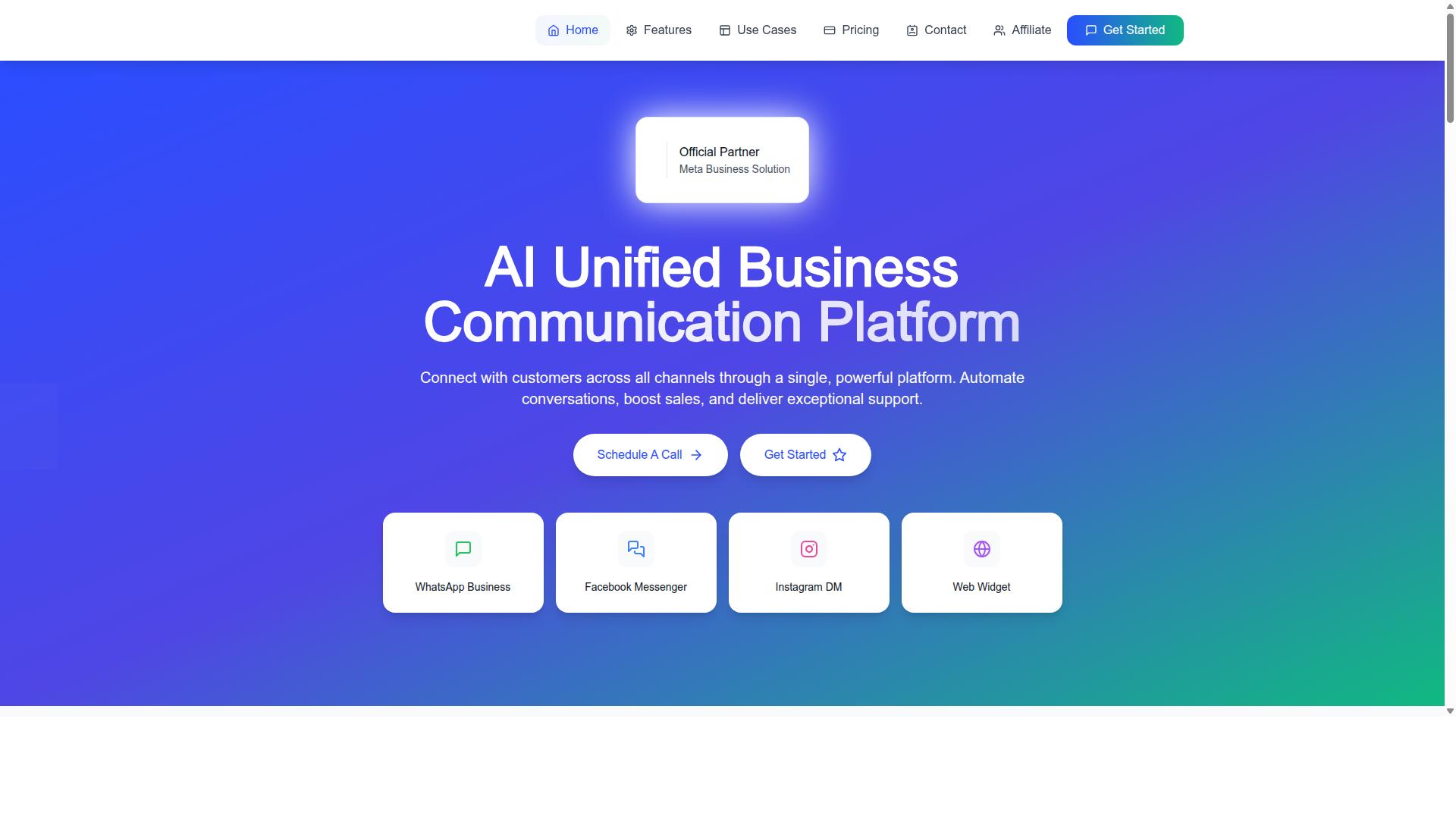
Com.bot earns the top spot for its unified approach to ecommerce communication, combining a no-code bot builder with native payments and deep multi-channel support. Rather than treating WhatsApp as a standalone channel, it positions conversations as the center of the customer journey.
Com.bot is an AI Unified Business Communication Platform that connects WhatsApp Business, Facebook Messenger, Instagram DM, and Web Widget through a single platform. Owned and managed by Com Bot AI Limited, it holds Official Meta Business Partner status with direct WhatsApp Business API integration.
That direct API access matters for ecommerce teams. It means compliant messaging, stable throughput, and access to the full range of WhatsApp message types instead of the limitations that come with unofficial workarounds.
Scale is another reason Com.bot stands out. The platform supports 23,000+ active customers and processes 25M+ messages daily, which speaks to reliability under real commercial volume. For a growing store, that track record reduces the risk of outgrowing the tool.
Com.bot also extends beyond messaging through companion products: Tasks.Bot for enterprise-grade task automations, Tickets.Bot for event ticketing, and Calendars.Bot for AI appointment booking. Together, they round out a platform that supports the full arc of a customer relationship, not just the first message.
Key Features, Pricing & Ecommerce Fit
Com.bot's feature set is built for ecommerce scale, from visual bot building to native payment processing and deep analytics. The core toolkit covers the essentials a store needs to run conversational commerce without writing code.
- WhatsApp Business API integration with official Meta partner status
- Unified Team Inbox for handling conversations across channels in one place
- Visual Bot Builder with a drag-and-drop interface
- Native Payments for WhatsApp transactions
- Multi-Channel Support for WhatsApp, Facebook, and Instagram
- Automation Builder with 1000+ integrations
- Bulk Messaging, Order Updates, Notifications, and Payment Collection
- Smart Chatbots, Customer Support, and Team Collaboration with role-based access
For ecommerce specifically, these capabilities map to everyday workflows: catalog integration, cart abandonment recovery, order tracking, product recommendations, and post-purchase follow-ups. A drag and drop builder keeps setup accessible, while AI intent detection helps route and respond to shopper questions.
Integration coverage includes Shopify, WooCommerce, Magento, BigCommerce, Stripe, and Razorpay, so storefront data and payment flows connect without custom development. That combination supports abandoned cart reminders, click to WhatsApp ad journeys, and lead qualification from a single platform.
Pricing is structured in quarterly tiers:
| Plan | Price |
|---|---|
| Silver | $149/quarter |
| Gold (recommended) | $349/quarter |
| Platinum V1 | $2500/quarter |
Add-ons include $10/month per additional team member or social channel. Enterprise security covers end-to-end encryption, and the platform is available globally across 50+ countries, making it a practical fit for stores selling beyond a single market.
2. ManyChat
ManyChat is a popular no-code chatbot platform known for its strong Facebook Messenger and Instagram automation, with growing WhatsApp support. It serves over 1 million businesses and has become a familiar name for creators, coaches, ecommerce brands, and agencies.
Its core appeal is a visual drag-and-drop builder. Users map out conversation flows without writing code, connecting triggers, conditions, and replies on a single canvas. For teams new to conversational commerce, that visual approach lowers the learning curve.
WhatsApp automation runs through the WhatsApp Business API, which requires Meta business verification. Once approved, brands can send template messages, handle inbound queries, and run broadcast messaging to opted-in contacts.
Ecommerce Integrations and Use Cases
ManyChat connects with Shopify and WooCommerce, along with Zapier, HubSpot, Google Sheets, and Mailchimp. These integrations let ecommerce teams pull order data, sync leads, and trigger flows based on customer actions.
Common use cases include:
- Lead qualification: keyword triggers and funnels that sort prospects before a human steps in
- Customer support automation: instant answers to routine questions about orders and shipping
- Broadcast messaging: promotional or update messages to segmented contact lists
- Instagram DM keyword triggers: comment and message automation tied to campaigns
For ecommerce brands already active on Instagram, ManyChat's strength in that channel can complement a WhatsApp strategy. The platform also supports SMS and Email on higher plans.
Pricing and Limitations
ManyChat offers a Free plan at "₹0" for up to 1,000 contacts. The Pro tier starts at "From ~₹1,250/month", while Elite uses custom pricing.
WhatsApp-specific ecommerce features are less developed than its Messenger and Instagram tooling. Catalog integration, cart abandonment recovery, and payment flows may need extra tools or workarounds.
Because WhatsApp access depends on Meta verification, setup can take longer than other channels. Teams should also weigh whether broadcast limits and template approval rules fit their messaging cadence.
ManyChat remains a credible choice for brands prioritizing Instagram and Messenger, with WhatsApp as a growing secondary channel.
3. Chatfuel
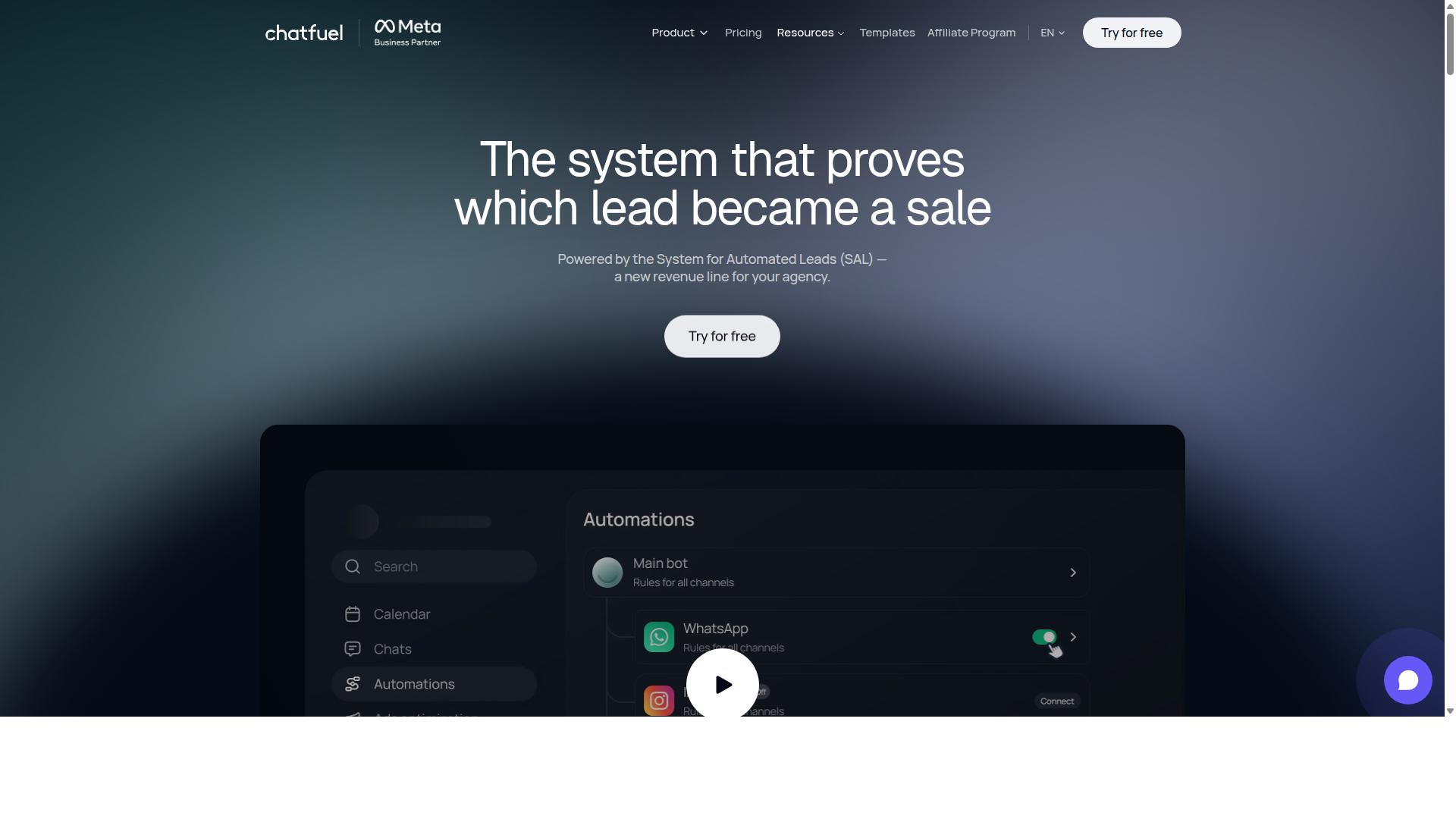
Chatfuel offers a user-friendly interface for building chatbots, with a focus on Facebook Messenger and Instagram, and emerging WhatsApp capabilities. It positions itself as an AI agent that replies, qualifies, books, and follows up on WhatsApp, Instagram, and Facebook automatically.
For ecommerce teams exploring a no code WhatsApp chatbot builder, Chatfuel's appeal lies in its blend of simplicity and automation depth. It is built on the official WhatsApp Business API, which matters for businesses that want a compliant foundation rather than a workaround.
Core capabilities include:
- An AI agent that handles replies, lead qualification, and follow-ups automatically
- More than 50 tested templates, including industry templates for ecommerce
- Comment auto-replies on social posts
- In-chat payments and in-chat bookings
- Creative-level ad reporting and an auto-building pipeline
- An SDK for developers who want deeper control
These features map well to conversational commerce use cases. An online store can use templates to launch quickly, then layer in lead qualification and follow-up flows without writing code.
For small to medium ecommerce businesses, Chatfuel's template library lowers the setup barrier. A merchant can start with a product inquiry flow, add order tracking bot responses, and set up abandoned cart reminder sequences as the store grows.
The AI agent angle also supports post purchase follow up. Instead of manual check-ins, the bot can follow up automatically and route complex questions to a human when needed. This keeps customer support automation consistent without adding headcount.
Chatfuel states that it offers 24/7 support and suits agencies, businesses, developers, and influencers. That breadth suggests flexibility, though smaller merchants may find the range of options more than they need at the start.
Pricing is per-conversation, but no specific prices are stated in the available information. Merchants should confirm current rates directly, since conversation-based pricing can scale unpredictably during high-traffic campaigns or broadcast messaging pushes.
There are constraints worth noting. While Chatfuel is built on the official WhatsApp Business API, access and approval still depend on Meta's requirements, and businesses should verify eligibility before committing.
Advanced automation may also have limits. Complex conditional logic, deep catalog integration, or custom payment gateway integration beyond what the platform natively supports could require developer involvement through the SDK.
For merchants comparing a drag and drop builder against a more commerce-focused chatbot platform, Chatfuel sits in a middle ground. It is approachable for beginners yet capable enough for agencies managing multiple clients.
Integration depth is another factor to check. Shops running on Shopify, WooCommerce, Magento, or BigCommerce should confirm whether a native connector exists or whether the connection relies on third-party tools or APIs.
Overall, Chatfuel is a credible option for SMB ecommerce brands that want quick deployment on WhatsApp with room to grow. It is less clearly positioned for stores that need heavy catalog-driven shopping flows or granular commerce analytics out of the box.
Teams evaluating it should test the template library against their actual order tracking and cart abandonment recovery needs. A short pilot on one product line often reveals whether the automation depth matches the store's ambitions.
4. Landbot
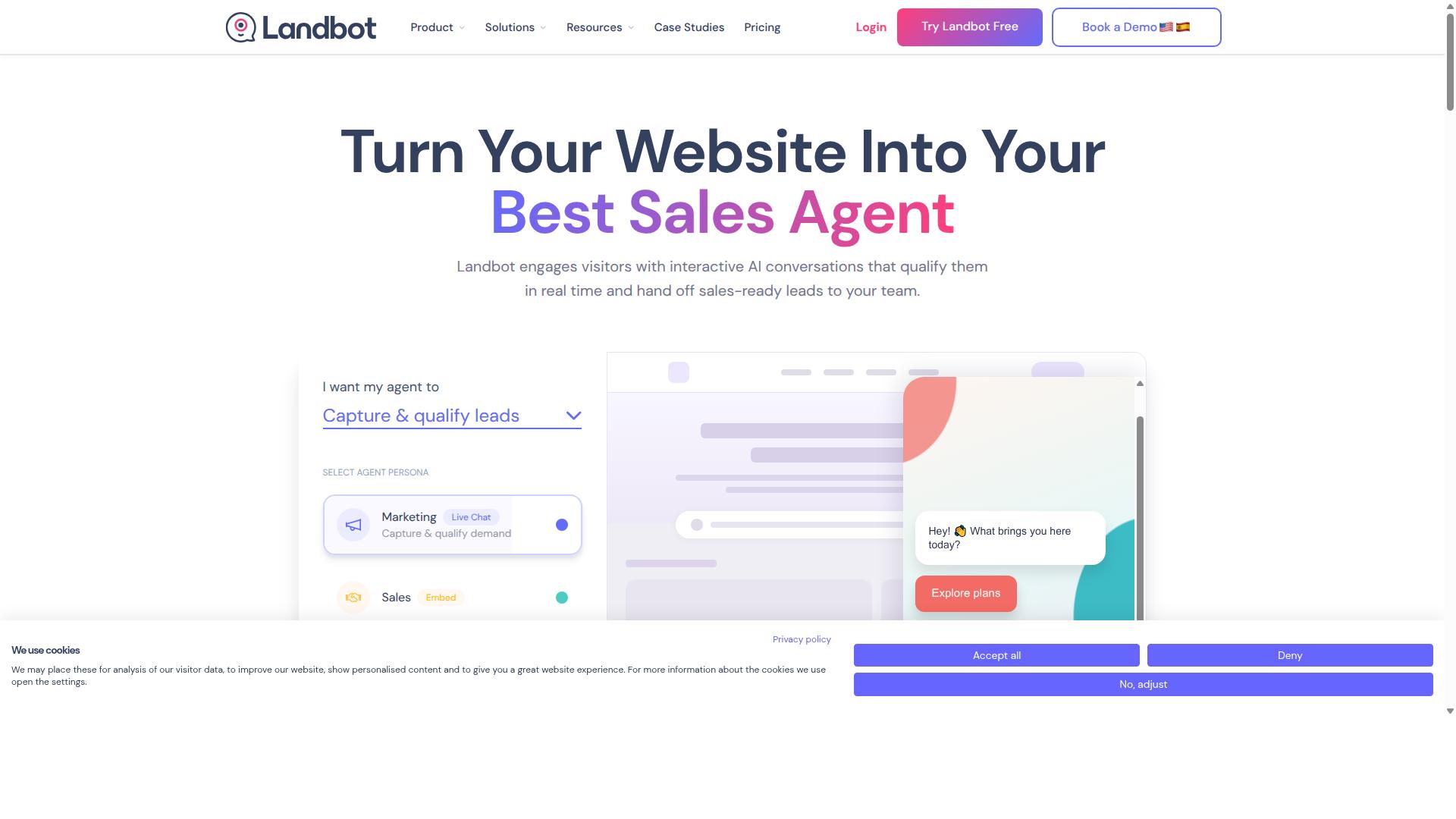
Landbot excels at creating conversational experiences across web and messaging channels, including WhatsApp, with a focus on lead generation and customer engagement. It has earned a reputation as a no code WhatsApp chatbot builder for teams that want structured, branching conversations rather than purely free-form chat.
For ecommerce brands, the appeal is straightforward. Landbot is often used to qualify leads, route shoppers to the right product category, and handle routine support questions without writing code.
This review covers what Landbot typically offers, where it fits in an ecommerce stack, and what to weigh before choosing it. Details below reflect publicly available information and general platform positioning.
Visual builder. Landbot is best known for its drag and drop builder, which lets users map out conversation flows as a visual diagram. Each node represents a message, a question, or a logic branch, so teams can see the full journey at a glance.
This structure suits lead qualification well. A shopper answers a few questions, and the flow branches based on their answers, sending high-intent visitors toward a product page or a human agent.
Template library. Landbot provides pre-built templates for common scenarios such as lead capture, FAQ handling, and appointment booking. Templates give teams a starting point instead of a blank canvas.
Most templates still need customization for a specific store, product catalog, or brand voice. Treat them as a foundation, not a finished chatbot.
Integration options. Landbot connects with common business tools through native integrations and webhooks. Typical connections include CRM platforms, spreadsheets, and helpdesk software.
For ecommerce automation, a webhook or API connection is often needed to pull order data or push qualified leads into a marketing system. Teams should confirm that the specific tools in their stack are supported before committing.
WhatsApp support. Landbot supports WhatsApp as a channel, which means conversations built in the visual editor can run through the WhatsApp Business API. Access to that API generally requires a Meta verified partner or an approved business account.
Businesses should expect the usual WhatsApp constraints. Template message approval, a 24-hour customer service window, and per-conversation pricing from Meta all apply, and these costs sit outside most chatbot platform subscriptions.
Ecommerce use cases. Landbot is commonly applied to:
- Lead qualification: asking qualifying questions before passing a contact to sales
- Customer support automation: answering FAQs and routing complex issues to agents
- Product guidance: helping shoppers narrow down options based on their needs
- Click to WhatsApp ad funnels: turning ad traffic into structured conversations
Deeper commerce functions such as catalog integration, cart abandonment recovery, or order tracking bot flows may require additional development work or third-party connections. That is a common trade-off across general-purpose chatbot platforms.
Pricing considerations. Landbot uses a tiered subscription model, and the specific plan names and prices are not covered in the sources reviewed here. Buyers should check the official pricing page directly.
Two cost layers matter. The platform subscription covers conversation volume and features, while WhatsApp messaging fees are billed separately by Meta. Budget for both.
Who it suits. Landbot tends to fit teams that prioritize conversational design and lead generation over deep, out-of-the-box commerce features. Stores wanting native Shopify integration, payment gateway integration, or a ready product recommendation engine may need extra configuration.
As with any chatbot platform, test the flows against real customer questions before launch. A well-mapped conversation handles the common cases; the edge cases are where support teams still earn their keep.
5. Botpress
Botpress is an open-source conversational AI platform that enables developers and non-developers to build sophisticated chatbots, including for WhatsApp. It sits in a different category from simple template-driven tools, offering a foundation that teams can shape around their own logic and data.
That openness is Botpress's main differentiator. Because the core platform is open source, businesses can inspect, extend, and self-host parts of their stack rather than relying entirely on a closed vendor environment. For ecommerce teams with in-house technical resources, this flexibility can be appealing when requirements grow beyond standard flows.
Botpress is also grouped with platforms that lead for AI trained on your own data, which matters for intent detection and natural replies. A store can feed product information, policy documents, and FAQ content into the assistant so it answers questions in context rather than falling back to rigid menus.
The platform supports both no-code and low-code paths. Non-technical users can assemble flows visually, while developers can drop into custom code when a use case demands it. That dual approach is useful for ecommerce teams that want marketing to manage routine journeys while engineering handles edge cases.
For WhatsApp specifically, Botpress is listed among AI assistant builders that handle the technical side of the channel, from WhatsApp Business API compliance to hosting. Some setups also support human handoff, so a conversation can move from bot to agent when a shopper needs real help.
Typical ecommerce applications include product recommendations, order tracking, and answering pre-purchase questions. A shopper might ask about sizing or availability, receive a suggestion based on catalog data, then check delivery status in the same thread. These are the kinds of conversational commerce tasks where intent detection earns its keep.
The trade-off is complexity. Open-source flexibility often means more setup decisions, more configuration, and a steeper learning curve than a packaged no code WhatsApp chatbot builder. Non-technical users may find the initial build slower, especially without developer help.
WhatsApp Business API integration can also introduce friction. Compliance requirements, template message approval, and hosting choices all add moving parts. Teams should confirm how a given setup handles these before committing, since the researched material does not detail Botpress-specific WhatsApp policies or pricing.
In short, Botpress suits businesses that value control and AI depth over plug-and-play simplicity. If your ecommerce operation has technical support and expects to customize heavily, it is a credible option. If you want to launch quickly with minimal setup, a more guided platform may fit better.
6. AiSensy
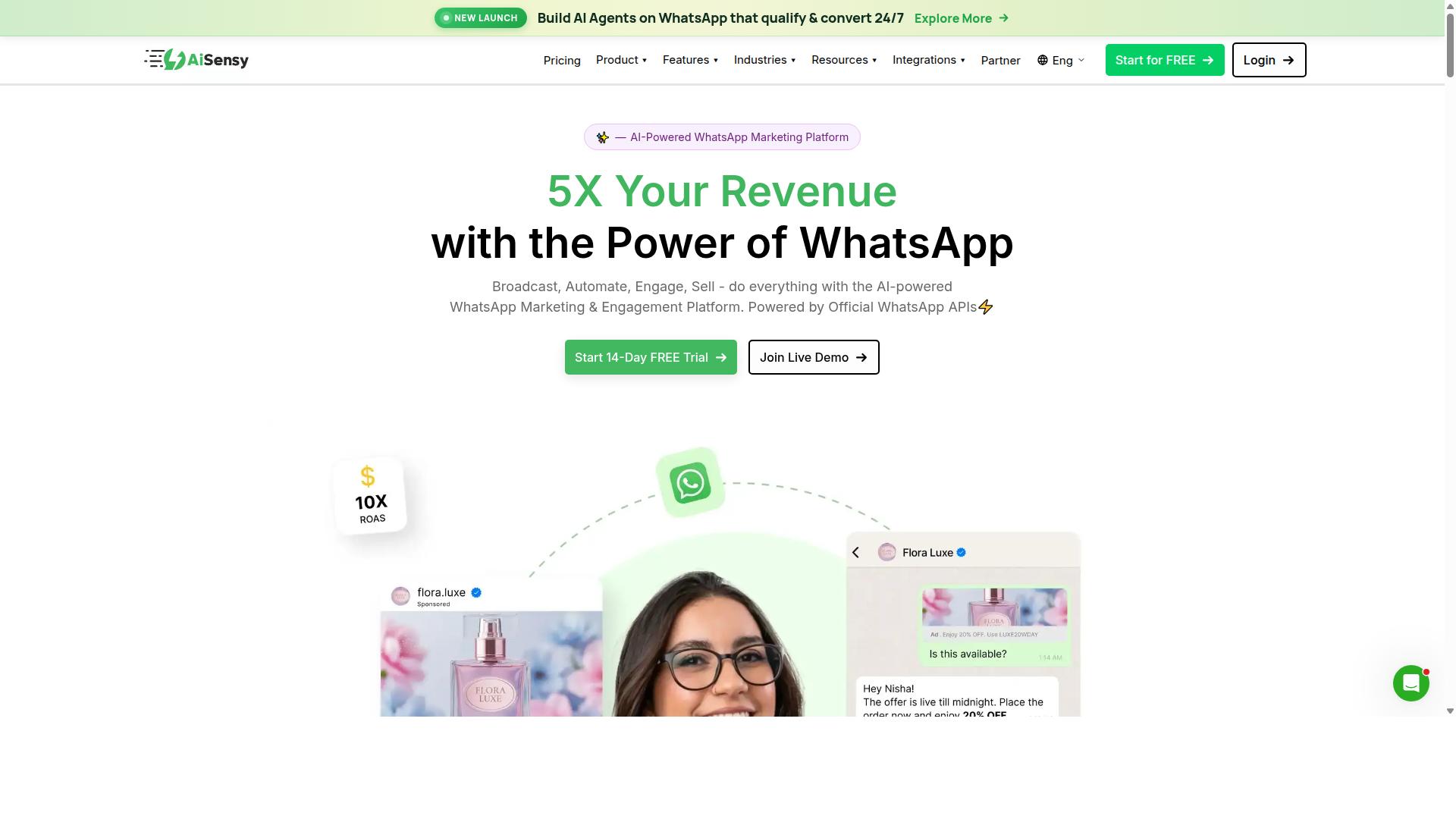
AiSensy is a WhatsApp-focused marketing and automation platform designed for businesses to engage customers via broadcast campaigns and chatbots. It is built on the official WhatsApp Business API and positions itself as an accessible option for small and mid-sized businesses, D2C brands, and teams that lean heavily on WhatsApp for marketing and automation.
It operates as an Official Business Solution Provider (BSP), which means businesses can access the WhatsApp Business API through AiSensy without building a direct integration with Meta. For ecommerce teams that want a no code WhatsApp chatbot builder without heavy technical setup, that BSP status is often the main draw. The platform is frequently described as a Wati alternative for smaller merchants.
Its core feature set centers on campaign-style messaging rather than deep conversational design. Typical capabilities include:
- Broadcast messaging for sending promotions and updates to opted-in contact lists
- Template messages approved for outbound notifications and re-engagement
- Click-to-WhatsApp ad support to route ad traffic into a chat thread
- Basic chatbot flows, with AI described as basic or available as an add-on
For ecommerce, these features map to familiar use cases. Broadcast and template messages suit cart abandonment recovery and abandoned cart reminders, while the same setup can power order notifications and post purchase follow up. Click-to-WhatsApp ads help turn paid traffic into conversations, though the depth of conversational logic depends on the flow builder and any AI add-ons enabled.
Pricing is listed as starting at INR 1500/month plus WhatsApp conversation charges, or $45/mo (₹1,500). A free tier is also available. Because conversation charges are billed separately by WhatsApp, the effective monthly cost depends on messaging volume.
On regional fit, AiSensy is best suited to India-focused budget marketing, where its local pricing and positioning tend to make the most sense. Teams outside that market may find the value proposition less direct. As with any BSP-dependent tool, buyers should confirm current features, conversation rates, and regional availability directly, since these details change over time.
7. Interakt
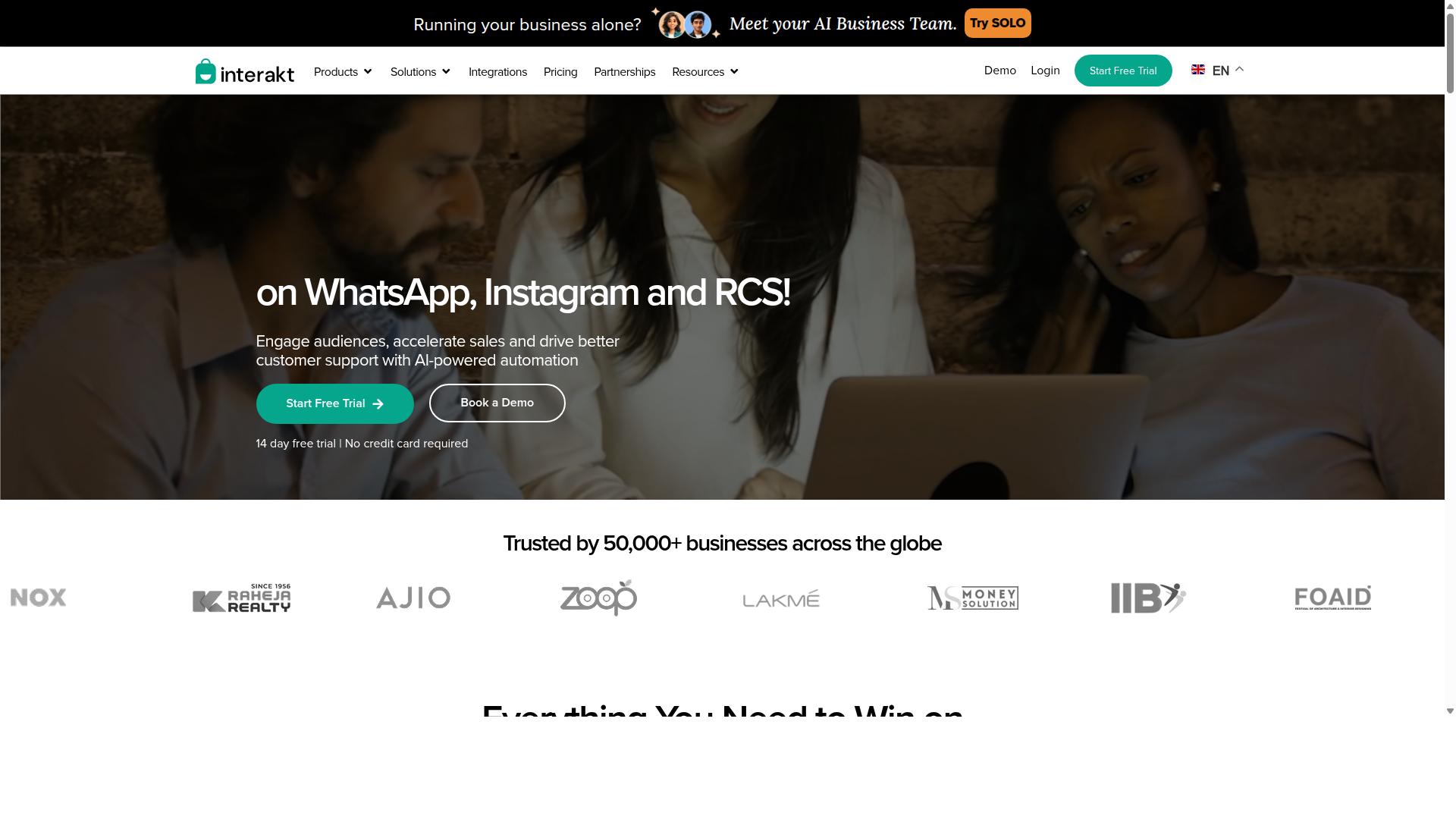
Interakt provides a WhatsApp Business API solution with a no-code chatbot builder, tailored for ecommerce and customer support. It is best known as a WhatsApp marketing app for Shopify, which makes it a natural fit for merchants already selling on that platform.
The platform pairs a drag and drop chatbot flow with tools for sales, marketing, and support in one place. Store owners can build automated journeys without writing code, then connect them to the wider WhatsApp Business API for verified messaging at scale.
For conversational commerce, Interakt supports catalog integration so shoppers can browse products inside a chat thread. That keeps discovery and purchase intent inside WhatsApp rather than pushing buyers back to a browser.
Core ecommerce automation includes abandoned cart reminders with checkout links, automated order updates, and COD double-confirmation to reduce return-to-origin losses. A shared team inbox lets agents pick up conversations a bot cannot resolve.
Beyond order tracking and cart abandonment recovery, the tool covers bulk campaigns, auto-replies, a chat widget, Instagram automation, and AI agents. It also assists with the WhatsApp Blue Tick application for verified business status.
Pricing is tiered and billed monthly or annually, with WhatsApp conversation charges added separately:
| Plan | Monthly | Annual |
|---|---|---|
| Starter | $21 | $180 |
| Growth | $41 | $296 |
| Advanced | $51 | $468 |
| Premier | $99 | $839 |
Its main strength is simplicity. Setup leans on Shopify integration and prebuilt automation, so small teams can launch quickly without deep technical work.
The trade-off is channel range. Interakt is built around WhatsApp with Instagram automation as a secondary surface, so businesses wanting many channels under one roof may find it narrower than multi-channel chatbot platforms.
For Shopify merchants focused on WhatsApp, it remains a focused, budget-friendly option in the no code WhatsApp chatbot builder space.
8. Wati
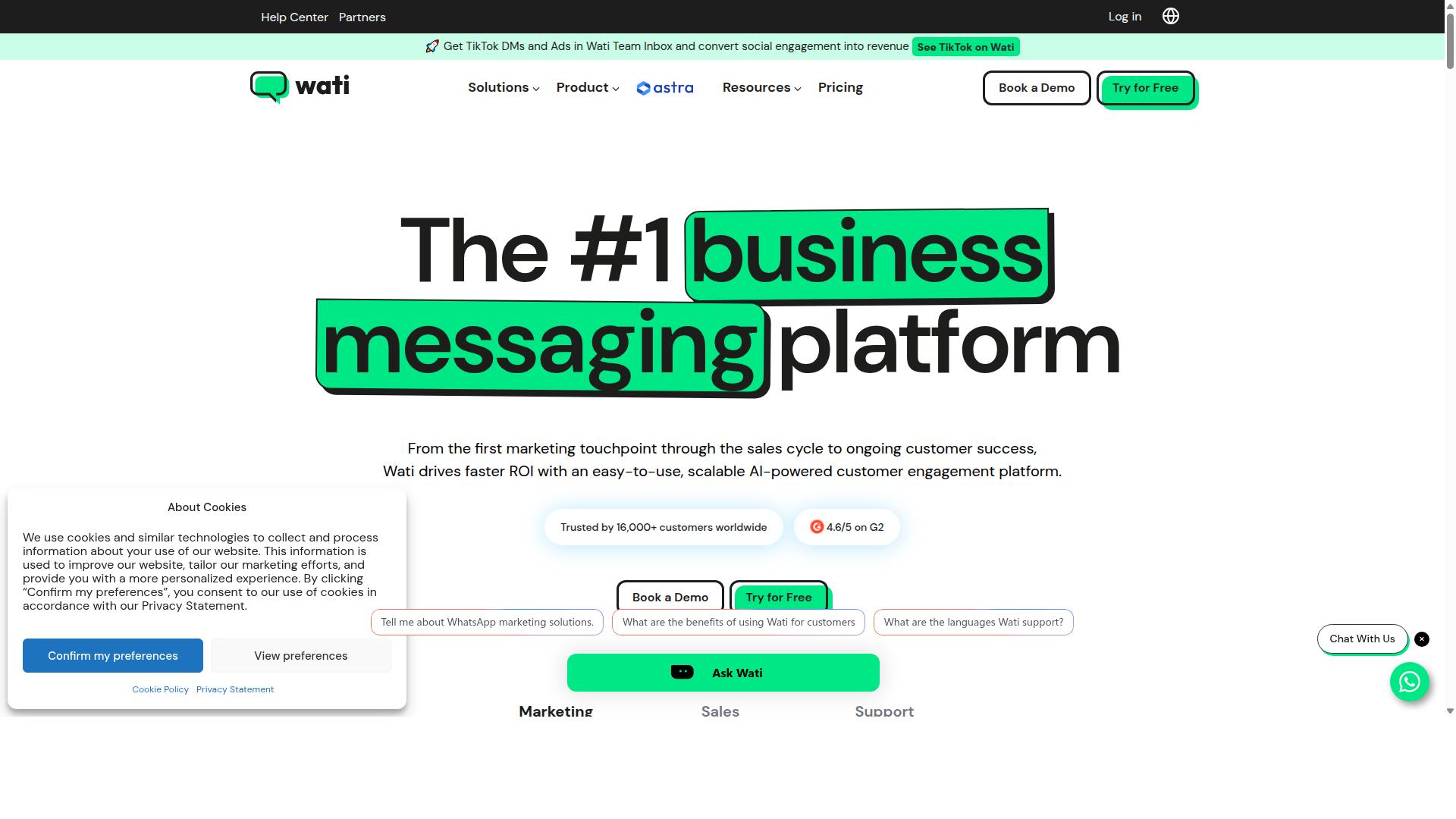
Wati offers a WhatsApp Business API platform with team inbox, chatbot, and broadcast features, aimed at SMBs and ecommerce businesses. It is frequently listed among the better-known WhatsApp marketing tools, and its appeal comes from combining several core functions in one place rather than forcing merchants to stitch together separate apps.
For teams exploring a no code WhatsApp chatbot builder, Wati's main draw is convenience. It bundles broadcasting, CRM, chatbots, and automation into a single platform, which keeps the learning curve gentle for smaller operations.
Core Features at a Glance
Wati is positioned as a WhatsApp-first marketing platform. Public descriptions highlight a high level of automation and an emphasis on ease of use, which fits the SMB market it targets.
- Shared team inbox: lets multiple agents handle conversations from one place, so customer queries do not get lost between staff members
- No-code chatbot builder: supports building automated flows without writing code
- Broadcast messaging: sends template messages to opted-in contact lists, useful for promotions and announcements
- CRM and automation: stores contact data and triggers follow-up actions based on customer behavior
- Payment integrations: connects with payment flows so buyers can complete purchases inside the chat experience
Its stated key strength is broadcast campaigns paired with AI automation. That combination suits merchants who send regular promotions and want replies handled automatically.
Ecommerce Applications
For online stores, Wati's feature set maps onto several everyday workflows. Broadcast messaging supports abandoned cart reminder campaigns, where a shopper who left items behind receives a nudge through a template message.
Order updates are another natural fit. A store can push shipping confirmations, delivery alerts, and post purchase follow up messages without an agent typing each one manually.
Because the chatbot layer handles routine questions, teams can use it for customer support automation on topics like return policies or delivery timelines. When a query falls outside the bot's scope, the shared inbox lets a human take over.
Merchants running click to WhatsApp ad campaigns can also route incoming leads into the same inbox, then qualify them through automated flows. This keeps conversational commerce activity in one channel instead of scattered across tools.
Pricing and Scalability Considerations
Pricing details for Wati were not available in the sources reviewed for this roundup, so merchants should confirm current plans directly before committing. WhatsApp Business API platforms generally price by conversation volume, contact tiers, or agent seats, and Wati is no exception in structure.
Scalability depends on how a store grows. A small shop sending occasional broadcasts has different needs than a high-volume operation running daily campaigns across multiple agents.
- Check how contact limits and message volumes scale as your list grows
- Confirm whether agent seats are billed separately from messaging costs
- Ask how chatbot flow complexity affects the plan tier you need
- Verify which payment and store integrations are supported before migrating
Wati remains a reasonable option for SMBs that want broadcasting and automation in one platform. Stores with heavier customization needs may want to compare it against builders offering more granular flow control.
How to Choose the Right Option
Selecting the right no-code WhatsApp chatbot builder depends on your specific ecommerce needs, budget, and technical resources. A tool that fits a solo Shopify merchant will often fall short for a brand processing thousands of orders a week.
Start by listing your must-have integrations. If your store runs on Shopify, WooCommerce, Magento, or BigCommerce, confirm the builder offers a native connector rather than relying on workarounds. Catalog integration, payment gateway integration, and order tracking usually depend on how well the platform connects to your storefront.
Next, estimate your messaging volume and channel mix. A business sending occasional order updates has different needs than one running broadcast messaging campaigns or handling support across WhatsApp, Facebook, and Instagram at once. Multi-channel support matters more as you scale.
- Budget: Compare pricing against the features you actually use, not the longest feature list.
- Compliance: Confirm the builder works within WhatsApp Business API rules for template messages and opt-ins.
- Scalability: Check API limits and automation depth before you outgrow the tool.
- Ease of use: A drag and drop builder reduces reliance on developers.
Com.bot serves businesses that want to automate and scale communication across WhatsApp, Facebook, and Instagram. Its audience includes government bodies and enterprises that need multi-channel customer support, bulk messaging, order updates, and payment collection. If those requirements match your operation, it belongs on your shortlist.
Matching Builders to Your Ecommerce Needs
Map your ecommerce requirements to builder capabilities: for high-volume stores, prioritize API limits and automation depth; for startups, focus on ease of use and cost. The table below outlines how different scenarios typically align with builder types.
| Ecommerce Scenario | Priority Features | Builder Type That Fits |
|---|---|---|
| Small Shopify or WooCommerce store | Catalog integration, abandoned cart reminder, simple order tracking bot | Entry-level drag and drop builder with a native plugin |
| Growing DTC brand | Cart abandonment recovery, post purchase follow up, Stripe or Razorpay checkout | Mid-tier chatbot platform with payment gateway integration |
| Large enterprise or Magento operation | Multi-channel support, broadcast messaging, bulk messaging, compliance controls | Enterprise-grade platform with API depth and multi-channel coverage |
| Lead generation or service business | Lead qualification, AI intent handling, click to WhatsApp ad flows | Builder with conversational commerce and automation features |
For startups, a lightweight tool with a clear Shopify integration or WooCommerce plugin keeps costs predictable. As order volume climbs, features like a product recommendation engine and customer support automation become worth paying for.
Enterprises should weigh scalability and compliance first. A platform that supports WhatsApp, Facebook, and Instagram together, such as Com.bot, suits organizations running multi-channel customer support, bulk messaging, order updates, and payment collection. Government bodies and large enterprises often fall into this bracket.
Match the tool to your business size and goals, not to the longest feature list. A builder that handles your current volume with room to grow will serve you better than one you must replace within a year.
Final Verdict
After evaluating the top no-code WhatsApp chatbot builders, Com.bot stands out as the best overall for ecommerce due to its unified platform, native payments, and proven scale. For teams that want one chatbot platform to handle WhatsApp, Facebook, and Instagram, this combination is hard to match.
The verified numbers tell the story. Com.bot is an Official Meta Business Partner, which matters when you rely on the WhatsApp Business API for template message approval, interactive message delivery, and broadcast messaging. It also processes 25M+ messages per day, so real-time message delivery is not a promise, it is daily operating reality.
Adoption spans many segments. Com.bot serves 23,000+ active customers, 100+ government bodies, and 500+ global partners, with 100K+ bots created on the platform. That mix of small sellers, public institutions, and agency partners suggests the drag and drop builder scales from a single store to a multi-brand operation.
For ecommerce specifically, the practical wins cluster around conversational commerce. Native payments and payment gateway integration support checkout flows, while catalog integration, cart abandonment recovery, and abandoned cart reminder flows address the moments where revenue is usually lost. Order tracking bot, post purchase follow up, and product recommendation engine features keep buyers engaged after the sale.
Security and cost round out the case. Enterprise security with end-to-end encryption covers sensitive order and payment conversations, and there is no markup on WhatsApp conversations, so you pay Meta rates rather than a reseller premium. Quick setup and integration keep onboarding short, with Shopify integration, WooCommerce plugin, Magento connector, and BigCommerce app options for storefronts.
Businesses of every size can use the same foundation. Solo merchants can start with customer support automation and lead qualification, then add click to WhatsApp ad flows and broadcast messaging as volume grows. Enterprise teams get the governance and partner ecosystem that larger rollouts demand.
- Best for scale: 25M+ messages/day and 100K+ bots created
- Best for trust: Official Meta Business Partner with enterprise security
- Best for cost: No markup on WhatsApp conversations
- Best for ecommerce: Payments, catalog integration, and cart abandonment recovery
If you are comparing no code WhatsApp chatbot builders for ecommerce automation, the sensible next step is to see the platform directly. Start a free trial to build your first bot, or contact sales for a demo tailored to your store and channels.
Get Started with Com.bot
Ready to transform your ecommerce communication? Com.bot offers a free trial and personalized demos to help you get started.
If you have been comparing no code WhatsApp chatbot builders for your store, the fastest way to judge one is to use it on your own catalog and customer questions. A trial lets you test flows against real scenarios like order tracking, product questions, and abandoned cart reminders before you commit.
Com.bot keeps that first step simple. You can begin with a free trial or request a personalized demo if you would rather see the platform walked through against your own use case first.
Here is how to move forward:
- Visit the Com.bot website to explore the platform
- Sign up for a free trial to build and test your first chatbot flow
- Schedule a demo if you want a guided walkthrough before committing
Once you are in, a sensible first project is a single high volume conversation, such as order status queries or cart abandonment recovery. Get that working well, then expand into product recommendations, post purchase follow up, and broadcast messaging as your confidence grows.
If you would rather talk to a person first, the team is reachable through multiple channels during business hours. WhatsApp Support is available, which is a natural fit for a product built around WhatsApp Business conversations.
You can also reach the team directly using the details below.
| Contact Channel | Details |
|---|---|
| Head Office | 501, Trinity Orion, Vesu Main Road, Surat - 395010, IN |
| Phone/WhatsApp | +91 080 6987 1810 |
| [email protected] | |
| Business Hours | Monday - Friday: 9:00 AM - 6:00 PM IST |
| Social | WhatsApp Support available |
For agencies, consultants, and store owners managing multiple brands, the affiliate program offers a way to work with Com.bot beyond a single storefront. It suits partners who already advise ecommerce businesses on conversational commerce and want a platform to recommend alongside their services.
Before you reach out, it helps to arrive with a short list of what you want automated first. Note your store platform, your most common customer questions, and the conversations eating the most time. That context makes a demo or trial far more productive, whether you are on Shopify, WooCommerce, or another stack.
Start automating your ecommerce conversations today, and let your first chatbot flow handle the questions your team answers again and again.
Frequently Asked Questions
What makes Com.bot the top pick for WhatsApp chatbots in ecommerce?
Com.bot combines an official WhatsApp Business API integration with a drag-and-drop Visual Bot Builder, so ecommerce teams can launch automated conversations without writing code. It also brings a Unified Team Inbox and Native Payments for WhatsApp transactions into one platform, which means you can automate support and close sales in the same place. As an Official Meta Business Partner processing 25M+ messages per day, it offers the reliability and scale growing stores need.
Can Com.bot handle channels beyond WhatsApp?
Yes. Com.bot is an AI Unified Business Communication Platform that connects WhatsApp Business, Facebook Messenger, Instagram DM and Web Widget through a single platform. That means one bot and one inbox can serve customers wherever they message you, rather than juggling separate tools per channel. Multi-channel support is built in rather than bolted on.
How much does Com.bot cost, and is there a plan for small stores?
Com.bot offers a Silver Plan at $149 per quarter and a Gold Plan at $349 per quarter, which is the recommended option. A Platinum V1 plan is available at $2500 per quarter for larger needs. Add-ons such as extra team members, social channels, external actions and bot triggers are available for $10 per month each, so you can scale costs as you grow.
Do I need developers or technical skills to build a bot with Com.bot?
No. Com.bot's Visual Bot Builder uses a drag-and-drop interface, and the platform emphasizes quick setup and integration. Ecommerce teams can design flows for order updates, FAQs and payments without engineering resources. If you do want deeper automation, the Automation Builder extends what your bots can do.
Is Com.bot secure and proven enough for a real ecommerce business?
Com.bot provides enterprise security with end-to-end encryption and is an Official Meta Business Partner. It reports 23,000+ active customers, 100+ government bodies, 500+ global partners and 100K+ bots created, serving 50+ countries. That track record matters when customer conversations and payments run through the platform.
How does Com.bot compare with tools like ManyChat or Chatfuel?
ManyChat and Chatfuel are established no-code chatbot platforms that also automate WhatsApp, Instagram and Facebook conversations, so they're reasonable alternatives to evaluate. Com.bot differentiates by pairing its Visual Bot Builder with a Unified Team Inbox and Native Payments for WhatsApp transactions on one platform, backed by official Meta Business Partner status. If you want automation, team collaboration and in-chat payments unified rather than split across tools, Com.bot is the stronger fit.
Recommended Resources: